
Prostate health doesn't depend solely on age or genetics. Certain everyday behaviors, often seemingly harmless, promote inflammation or worsen urinary symptoms related to benign prostatic hyperplasia.
The good news is that unlike age or heredity, these lifestyle factors remain entirely in your hands. It is not about revolutionizing everything overnight, but rather identifying the behaviors that weigh most heavily on urinary comfort, in order to gradually correct them.
Here are six habits to change to preserve this gland for as long as possible.
Holding urine too often
Postponing the urge to urinate is not harmless. This reflex, common in meetings, in the car, or during a long trip, increases pressure in the bladder.
This pressure can hinder the complete evacuation of urine and promote urinary tract infections. In a man whose prostate is already enlarged, the effect is amplified: the bladder must exert greater effort to compensate for the obstruction created by the prostate. In the long term, this repeated habit can even contribute to a progressive weakening of the bladder muscle, making future urination more difficult.
This reflex is all the more common as it is often perceived as harmless. However, the more the bladder is regularly distended beyond its normal capacity, the more it loses its tone over time, a phenomenon that adds to the obstruction already caused by the adenoma.
The right reflex: urinate as soon as the need arises, and empty the bladder completely at each urination rather than interrupting it in a rush.
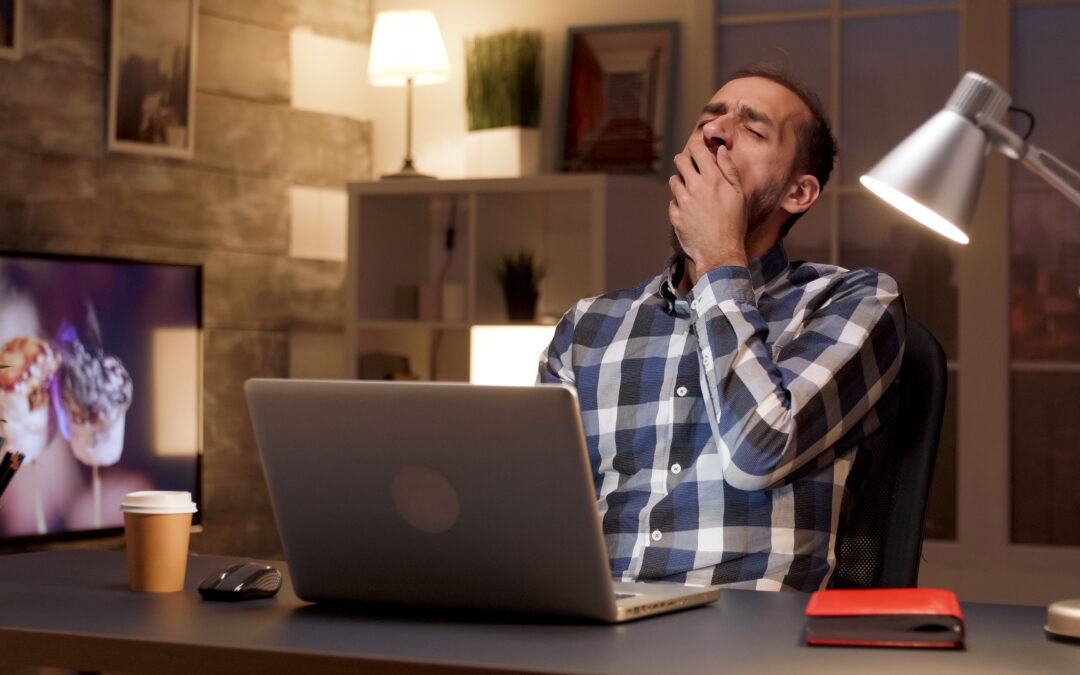
2. Sitting for long hours
A sedentary lifestyle slows down blood circulation in the pelvic region. This local congestion can eventually worsen prostatic inflammation.
It also contributes to weight gain, particularly in terms of abdominal fat, which itself is associated with a hormonal imbalance that increases prostate volume. This mechanism explains why overweight men statistically have a higher risk of developing urinary symptoms related to BPH.
The right reflex: incorporate a few active breaks into a day spent sitting. About thirty minutes of walking, swimming, or cycling a day is generally enough to see a benefit on pelvic circulation.
3. Drinking a lot at the end of the day
Staying hydrated remains essential, but timing matters just as much as quantity. Consuming a large amount of liquid in the evening, particularly at dinner, increases pressure on the bladder just as the body is preparing for rest.
This imbalance promotes waking up at night to urinate, a phenomenon called nocturia, which is already common in men suffering from BPH.
Certain beverages particularly worsen this phenomenon in the evening, due to their diuretic or irritating effect on the bladder. Without going into detail on this subject, it is useful to remember that the timing of consumption sometimes matters as much as the nature of the drink itself.
The right reflex: distribute one's hydration earlier in the day and limit drinks in the two to three hours before bedtime, without reducing the water intake necessary for the body.
4. Neglecting medical follow-up
The absence of symptoms does not mean the absence of a problem. Many men avoid consulting a doctor until urinary discomfort appears.
Yet, a regular check-up, including a digital rectal exam and possibly a PSA test depending on age and family history, makes it possible to detect changes in the prostate early before it becomes symptomatic. The French National Authority for Health (Haute Autorité de Santé) recommends discussing this topic with your primary care physician starting at age 50, or earlier in cases of family history. Postponing these consultations correspondingly delays the implementation of appropriate treatment, whereas early management generally provides access to more therapeutic options.
The right reflex: a routine check-up every one to two years starting at age 50, without waiting for symptoms to appear.
5. Adopting an unbalanced diet
What you eat directly influences prostate inflammation. Excessive consumption of red meat, processed meats, and saturated fats promotes this inflammation, while a diet rich in vegetables, fruits, and fatty fish tends to limit it.
This topic deserves full development: we discuss it in more detail in our articles dedicated to food and to beverages to limit for the prostate.
6. Let stress take hold for the long term
Chronic stress affects urinary health, not just mental well-being. It disrupts sleep, alters certain hormonal balances, and can increase the perception of symptoms already present in a man suffering from BPH.
Some men also notice that their frequent urges or pelvic pain intensify during particularly stressful periods, even though their prostate volume has not actually changed.
The right reflex: breathing exercises, regular physical activity, or simply sufficient rest time, without trying to eliminate stress entirely.
Fix these habits, one step at a time
It is not necessary to change these six behaviors overnight. Choosing just one adjustment at a time, such as urinating as soon as the urge is felt or cutting out drinks after dinner, is already enough to observe a difference in daily urinary comfort.
These habits obviously do not replace medical advice: they are a complement to regular monitoring, which is the only way to accurately identify the origin of symptoms and guide the most appropriate treatment, whether it is simple monitoring, drug therapy, or, in the case of more pronounced discomfort, a technique such as prostatic artery embolization.
The most important thing remains not to wait until the discomfort becomes disabling before taking action. Whether it is adjusting a habit or consulting a healthcare professional, every step counts to sustainably preserve urinary comfort.
For any questions regarding your situation, contact our team.
This article is for general informational purposes and does not replace medical advice.